It starts calm.
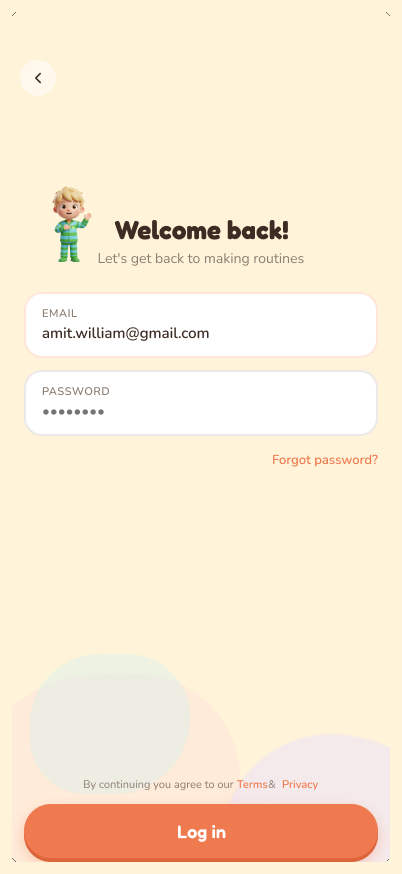
A warm, low-stimulus way in — no clutter, nothing to overwhelm a child or a tired caregiver.
Accessibility · Mobile · 0→1
A warm, visual routine app for autistic kids. Caregivers build routines in a few taps — or let AI draw them — and children follow their day as a picture-led journey they can actually read.
UX Researcher & Product Designer.
Research, UX, UI, prototyping & testing.
In active development
See how it works
A warm, low-stimulus way in — no clutter, nothing to overwhelm a child or a tired caregiver.
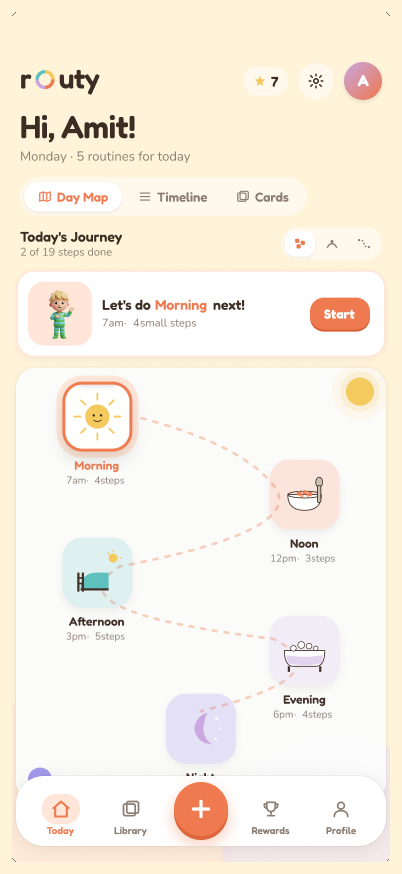
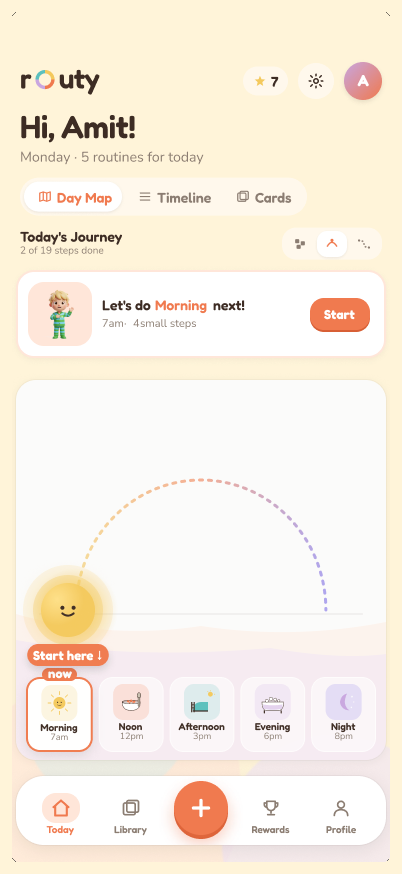
Today's Journey shows what's happening now and what comes next — the “first–then” structure therapists rely on.
The same day as a Map, as Cards, or as a Timeline — whichever way makes time make sense for this child.
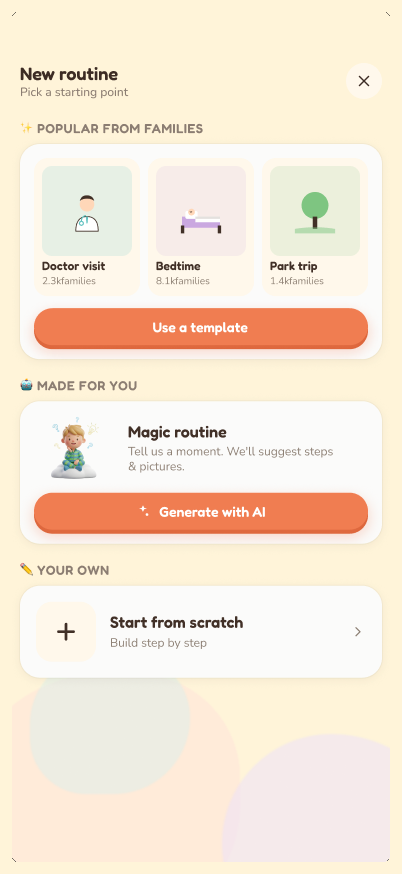
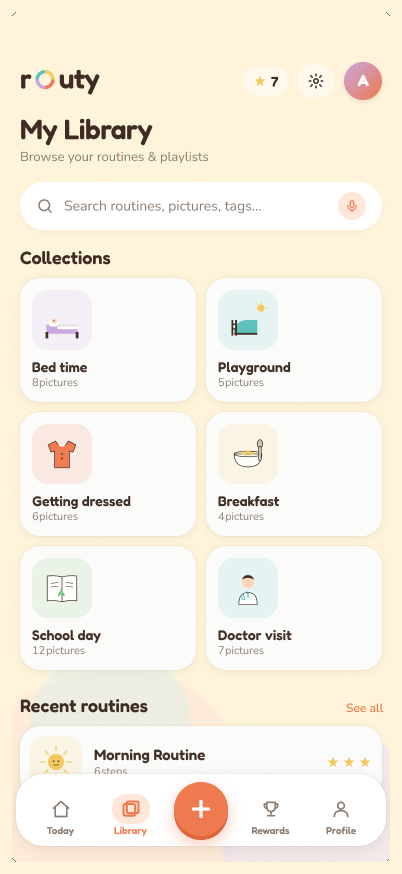
Start from a ready-made family template, or generate a whole routine at once — no evening-long setup wall.
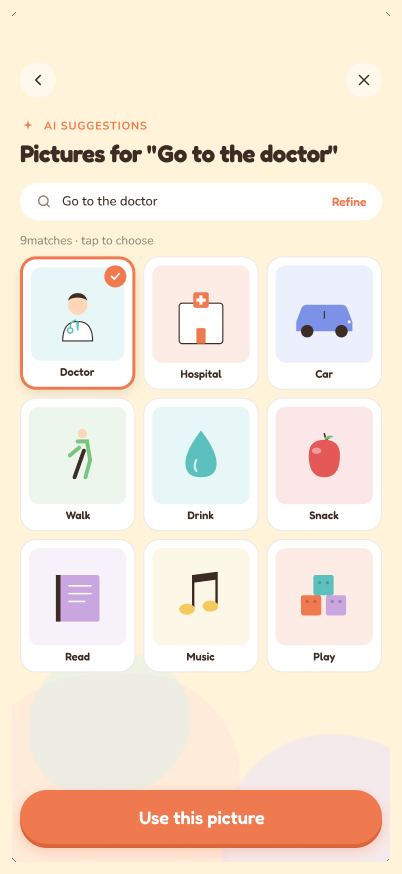
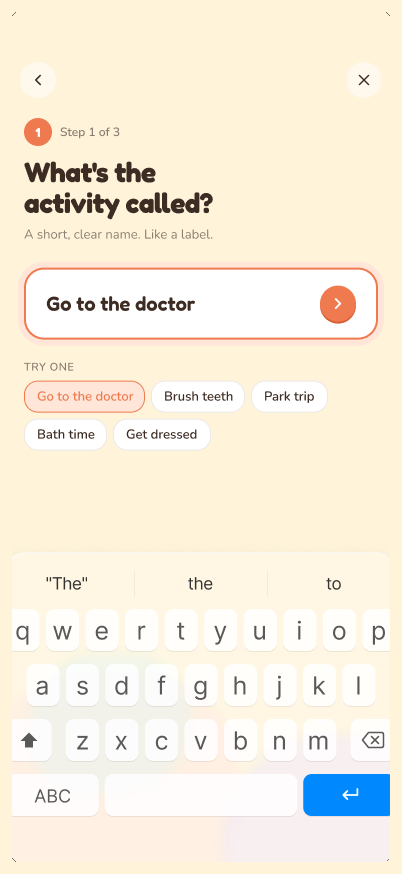
Type “go to the doctor” and Routy suggests the right image instantly — or pull one straight from your photos.
Routines grouped by moment, progress they can see — until they're checking Routy instead of asking what's next.
.png)
The problem
For an autistic child, an unpredictable day isn't an inconvenience — it's a source of real anxiety.
A clear, visual routine is one of the most evidence-backed ways to lower that anxiety and grow independence. But the tools that promise it are text-heavy, clinical, or so fiddly to set up that exhausted caregivers abandon them within days — and fall back on nagging, sticky notes, and doing it all themselves.
Mainstream reminder and checklist apps assume reading and abstract time. They don't match how many autistic kids actually process the day.
Building a visual schedule meant sourcing or shooting a photo for every single step. Most parents gave up before day one ever started.
Clinical tools felt like work — nothing made a child want to follow the routine, so consistency collapsed within a week.
The approach
“Better” is easy to say — so I went to the people who live these mornings every day to define it.
Surveys and interviews with parents, occupational therapists, and special-ed teachers about real daily routines — and the exact moments they break down.
Audited tools like Goally, Choiceworks, and Proloquo2Go. Strong on visual aids — but rigid, clinical, pricey, and heavy to set up.
Usability sessions with caregivers, then iterative refinement — keeping the interface calm, low-stimulus, and forgiving of mistakes.
I clustered the findings into three themes — and each theme became one of Routy's three design directions.
Abstract time and text don't land. Kids need the day rendered as something concrete they can read at a glance — now, and next.
The biggest barrier wasn't using the app — it was building it. Sourcing a picture for every activity quietly killed adoption.
Compliance fades fast. A routine sticks when finishing it feels like progress the child can see and own.
The solution
01
Routy turns the day into Today's Journey — a picture-led path that shows what's happening now and what comes next, the “first–then” structure therapists rely on. The same day can be read three ways — Map, Cards, or Timeline — so every child gets the view that makes their day make sense, and a warm “Hi, Amit!” greeting meets them where they are.
02
This is the fix that protects adoption. Start from a family template or let Magic Routine generate the whole thing with AI. Name an activity — “Go to the doctor” — and Routy suggests the picture instantly, or pulls from your own photos. The evening-long photo hunt is gone, and you can always edit later.
03
Routines are grouped into Collections by time of day — Morning, Bedtime, School day, Playground — so the day stays bundled and predictable. Progress advances visibly as each task is done, turning “get through it” into something the child can see, finish, and own — until they're checking Routy instead of asking what's next.
.png)
One warm, low-stimulus system — soft cream, a single friendly orange, a mascot to anchor it, and real photos doing the talking.
.png)
.png)
The impact
AI builds the visuals, so the work that used to kill adoption — a photo for every step — simply disappears.
Every child gets the representation that makes the day legible — not one rigid format for everyone.
Built on evidence-based supports — visual schedules and first-then — alongside the people who'd actually use it.
Directional signal from early testing with caregivers and clinicians — a concept validated with users, not production analytics. The project is in active development.
“The AI pictures changed everything. I built his whole morning in about three minutes instead of giving up halfway.”
— Parent of a 7-year-old · early testing“The three views matter. One of my kids needs the timeline, another only follows the picture map. Same app, both work.”
— Occupational therapist · advisory group“It's calm and it's warm — it doesn't feel like therapy homework. The students actually want to open it.”
— Special-education teacher · pilot“The first morning he checked Routy instead of asking me what's next, I almost cried. That's the whole point.”
— Parent, early testing session
A teammate suggested adding mood tracking late in development — a genuinely good idea that underscored the importance of holding scope. We parked it to keep the core promise sharp: see the day, build it effortlessly, want to follow it. Next up — validating the gamified streaks with a larger pilot, and pressure-testing the AI suggestions across edge-case activities. The project is in active development, with early testing showing real, encouraging impact.
Keep exploring
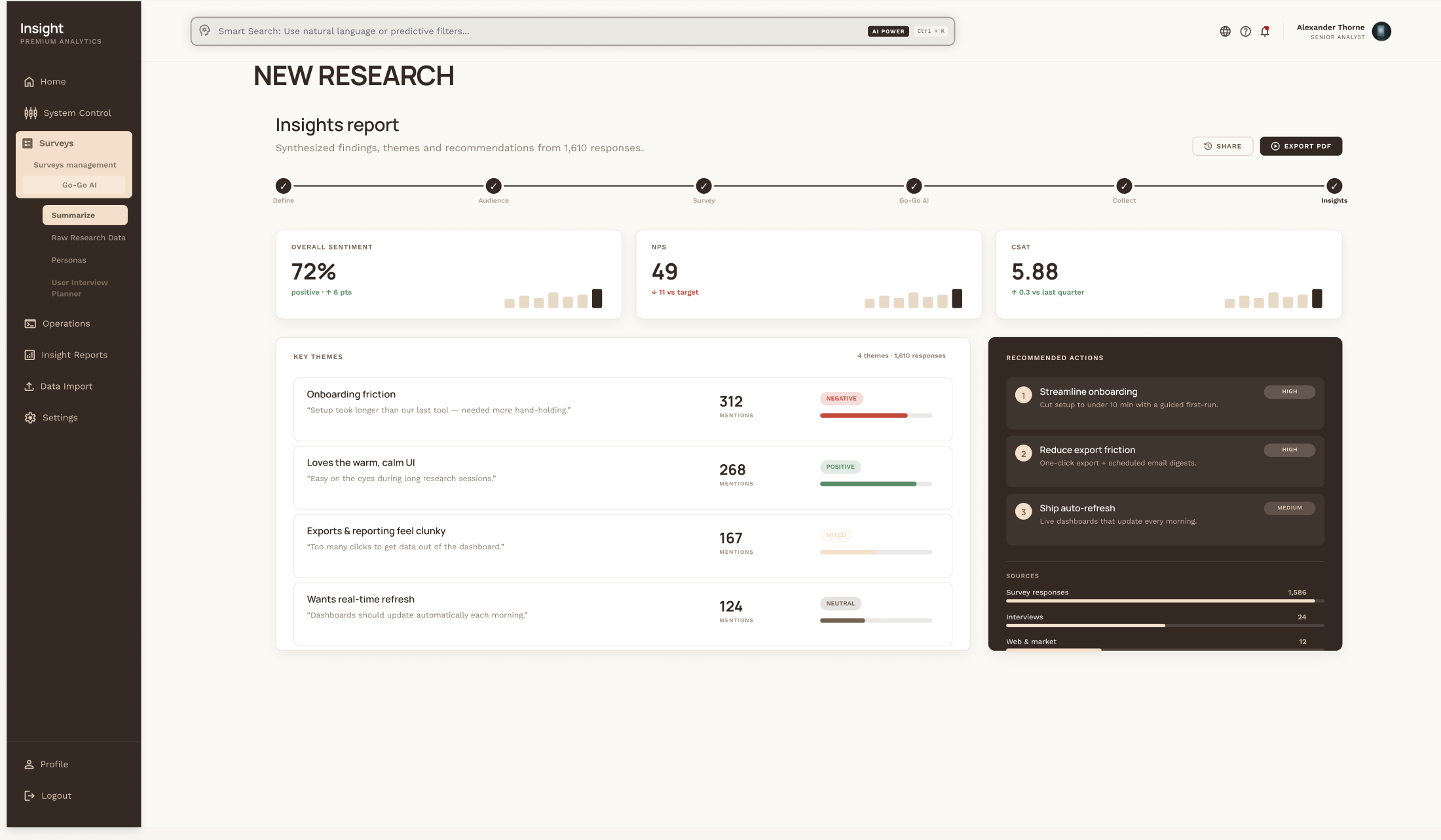
A clearer research platform and an AI companion that turns weeks of synthesis into hours.
Read case study →.png)
Cutting friction across parking, services, and support on a city portal.
Read case study →.png)
A personal recipe collection that centralizes, organizes, and shares dishes.
Read case study →